November 30
@
12:00 PM
–
1:00 PM
Myofibroblast Mechanics in Tissue Repair and Fibrosis
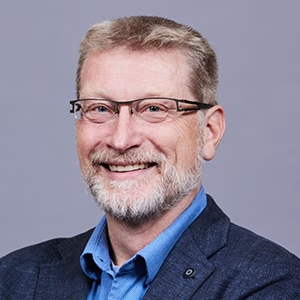
Boris Hinz, PhD
Laboratory of Tissue Repair and Regeneration
Keenan Research Centre for Biomedical Science at St. Michael’s Hospital
Faculty of Dentistry
University of Toronto, Ontario, Canada
Abstract:
Tissues lose integrity upon injury. To rapidly restore mechanical stability, various cell types are activated to become myofibroblasts. Hallmarks of the myofibroblast are secretion of extracellular matrix, development of adhesion structures with the extracellular matrix, and formation of contractile stress fibre bundles. Rapid repair comes at the cost of tissue contracture, due to the myofibroblast’s inability to truly regenerate tissue. When contracture and extracellular matrix remodelling become progressive and manifest as organ fibrosis, stiff scar tissue obstructs and ultimately destroys organ function.
Pivotal for the formation and persistence of myofibroblasts are mechanical stimuli arising during tissue repair and the chronic presence of immune cells. I will provide an overview of our current projects, aiming at investigating how mechanical factors orchestrate the activation and epigenetic maintenance of myofibroblasts. I will focus on myofibroblast interactions with macrophages and the extracellular matrix in persisting wound environments, using skin and lung injury as paradigms. By understanding and manipulating myofibroblast mechanoperception and intercellular communication, we will be able to devise better therapies to reduce scarring and support normal wound healing in organ and implant fibrosis.
Print PDF