On May 9, 2026, in the Kohl Center on the University of Wisconsin-Madison campus, 1,000 engineering students gathered for a joyful celebration that, for many, marked the culmination of their studies and the beginning of what comes next.
In the hallways before the much-anticipated College of Engineering Graduate Recognition Celebration, graduates clad in black gowns adorned with brightly colored cords, stoles and hoods embraced the moment (and their classmates) as they congratulated each other and said a few tearful goodbyes before preparing to step into their next chapter.
The event also drew more than 6,000 family members and friends—many arriving from around the world. Swept up in a shared sense of pride, they packed the Kohl Center stands, whistling, cheering and clapping loudly in moments meant not only for their graduates, but also to honor the achievements of every engineer.
From their processional into the area accompanied by “Pomp and Circumstance” to the individual recognition as graduates walked across the stage, for many, this formal, graduation-inspired event was a milestone years in the making. Celebrated in front of thousands, it was felt most deeply in the individual journeys behind it.
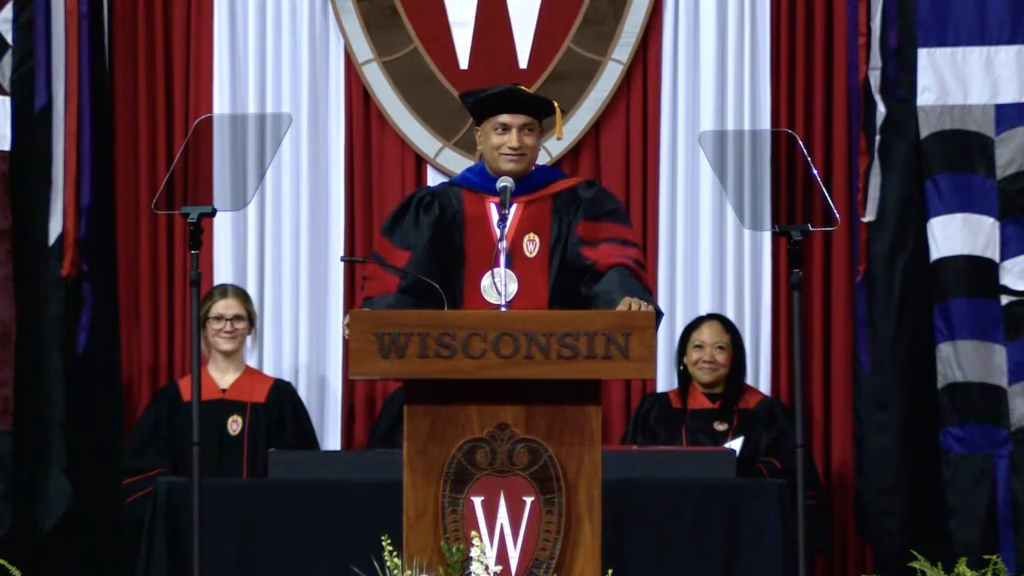
In his remarks to the graduates, Grainger Dean of the College of Engineering Devesh Ranjan noted that the graduates all came to UW-Madison with their own story, background and ambitions. He cited his own journey. “I grew up in India, curious about how things worked,” he said. “When I came to Madison as a graduate student, I didn’t know a single person. I certainly didn’t imagine I’d one day stand here as your dean. But engineering does something powerful: It doesn’t just teach you answers. It teaches you how to keep going when there are no clear answers.”
Graduating biomedical engineer Cole Weaver and environmental engineer Ann McGrath-Flinn each spoke about the ways in which their experiences sparked their passion and inspired their career trajectory. They also encouraged their fellow graduates to think about the ways they can ensure or amplify the impact of their work as engineers.
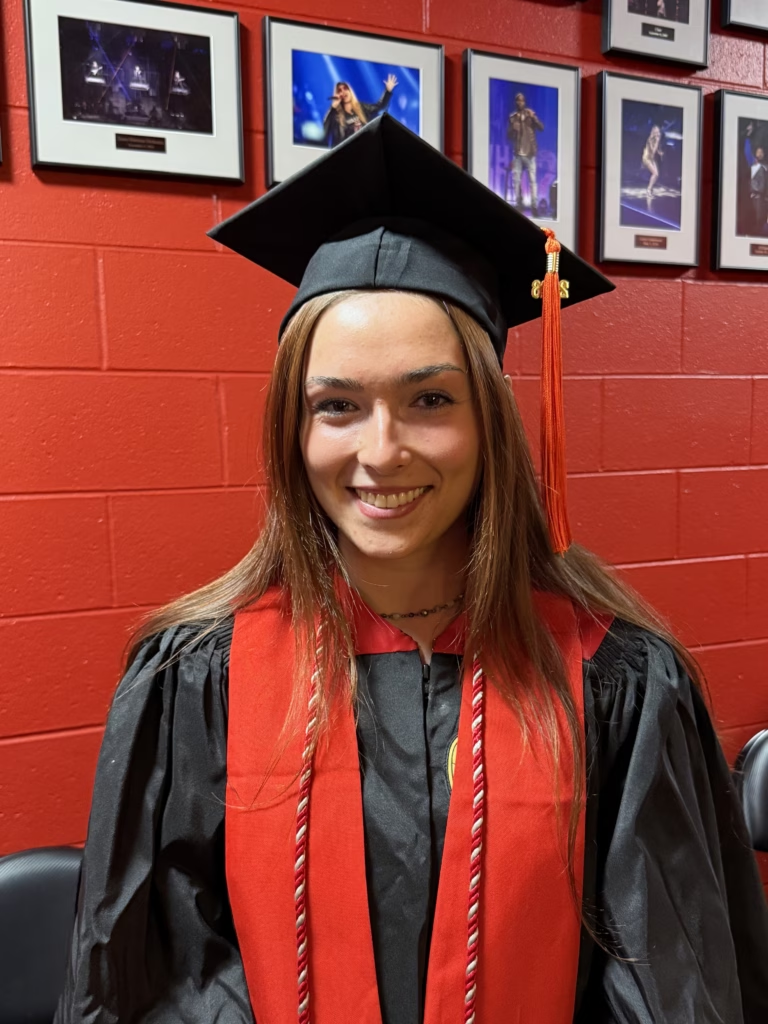
Growing up in Seattle, McGrath-Flinn developed a deep appreciation for our vast natural environment. “I was drawn to UW-Madison as it is unique in having a separate major for environmental engineering and a diversity of research labs in the field,” said McGrath-Flinn, who explores fresh and saltwater bodies through SCUBA diving. “The wonder I feel each time I dive brought me here to learn how to protect what I love, but the support, education and unique experiences I have had at Madison allowed me to obtain the knowledge and confidence to continue my academic and research journey. … As we go on to the next part of our journey, I urge everyone here to consider how they can make choices to positively impact our earth.”
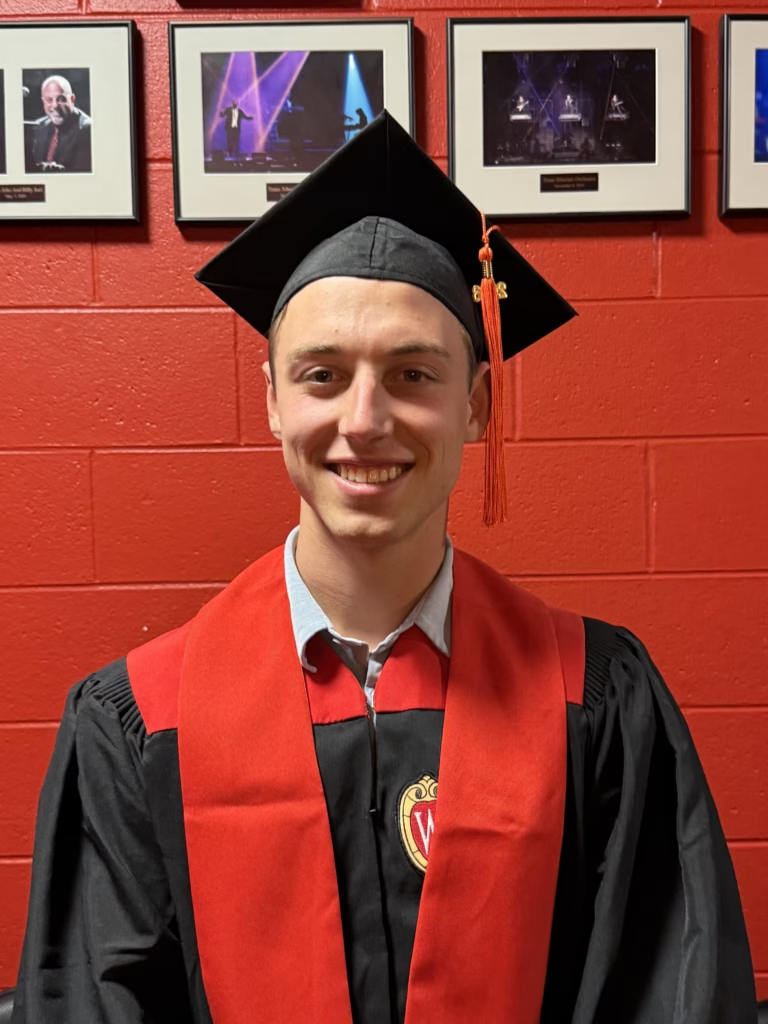
A native of McFarland, Wisconsin, Weaver plans to begin an MD/PhD program at Northwestern University in fall 2026. As an undergraduate, he spent five years as a researcher in Biomedical Engineering Professor Melissa Skala‘s lab. His talk highlighted the incredible promise of CAR T cell therapy, which can treat cancer by harnessing the body’s immune system. Through the lens of medicine, he encouraged graduates to think holistically about their work as engineers. “A breakthrough this powerful also raises a difficult question,” he said. “Who actually gets access to it? With treatment costs reaching nearly half a million dollars, this therapy remains out of reach for the majority of patients who need it. … We celebrate when a therapy becomes more advanced, but questions about cost, delivery and access deserve that same attention—because if a therapy works but cannot benefit the people who need it, then there is still a problem left to solve.”
At UW-Madison’s spring 2026 commencement, the college marked the graduation of more than 1,400 students—the largest cohort in college history.
And as they prepared to leave Madison, Ranjan, encouraged the graduates to embrace their impact through the Wisconsin Idea. “What you design, build and improve will shape lives far beyond your own—from healthcare to energy to infrastructure to technologies we haven’t even imagined yet,” he said. “You leave here with skills. But you also leave with responsibility: To build thoughtfully, to lead with integrity, and to take on problems that actually matter. Our world doesn’t need more easy solutions. It needs people like you. People who are willing to take on hard ones.”