As audacious of a challenge as achieving nuclear fusion continues to be—let alone producing net-positive energy from the reaction—it’s merely one piece of the equation when it comes to making fusion a viable piece of the energy puzzle.
There are considerable hurdles in developing the materials to contain ultra-hot plasma at commercial scale and manufacturing the necessary specialized components for fusion reactors. Then there’s the issue of educating and training a workforce in an ever-evolving industry.
And yet, those are challenges that the University of Wisconsin-Madison College of Engineering plans to tackle—in partnership with university colleagues, private industry and local and federal government entities. In that spirit, the college was among the hosts of the second Great Lakes Fusion Energy Summit, May 5, 2026, at the Discovery Building on the UW-Madison campus. Co-hosted by Wisconsin-based 5 Lakes Institute and the UW-Madison College of Letters and Science, the event brought together more than 350 fusion and plasma physics researchers from academia, industry leaders, government representatives and investors for fusion lab tours and panel discussions about supply chains, rising energy demand, the commercial fusion timeline and more.
Momentum around the idea of nuclear energy production—fusion and “traditional” fission—is building in Wisconsin. Gov. Tony Evers, who welcomed attendees, previously signed legislation commissioning a siting study for nuclear energy opportunities in the state (led by Paul Wilson, Grainger Professor of Nuclear Engineering and chair of the Department of Nuclear Engineering and Engineering Physics), establishing a nuclear power summit board and providing a sales and use tax exemption for fusion projects. And the College of Engineering itself included fusion among six recently announced “moonshots“—ambitious, society-shaping research frontiers it will undertake through large-scale collaboration.
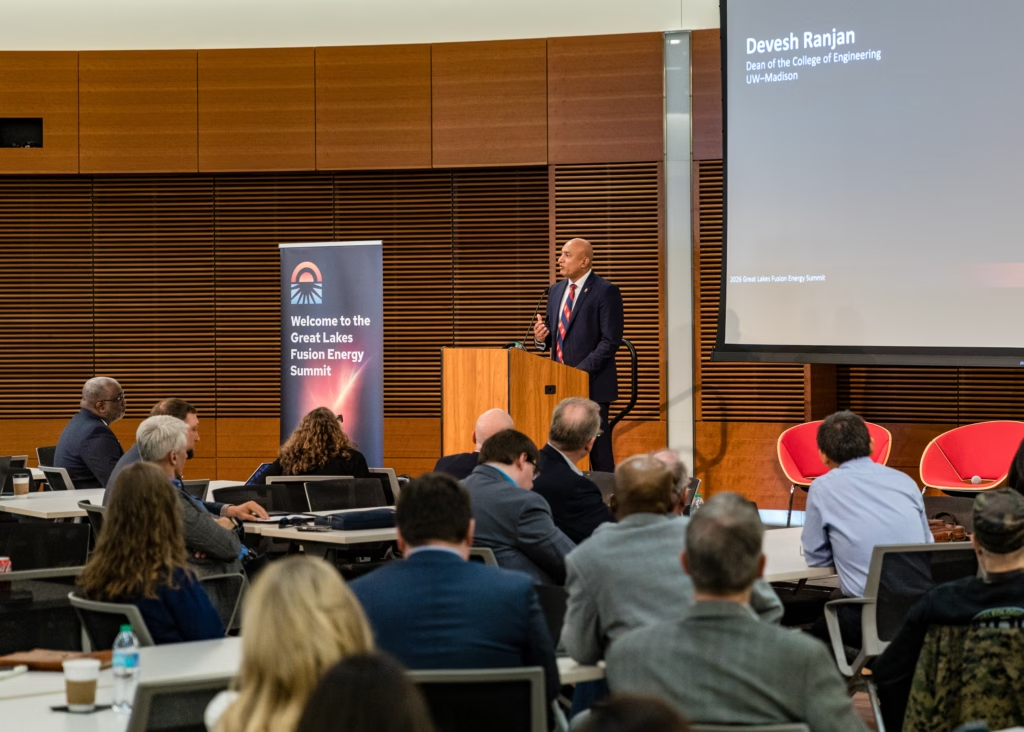
Devesh Ranjan, Grainger Dean of the College of Engineering, cited the example of groundbreaking vitamin D research that emerged from the UW-Madison in the early 20th century.
“I hope that in 10 years from now, people will say that commercial fusion, the technology that we’re using came out of the engineering moonshots and the ecosystem we have created through the Great Lakes region,” he told the audience.
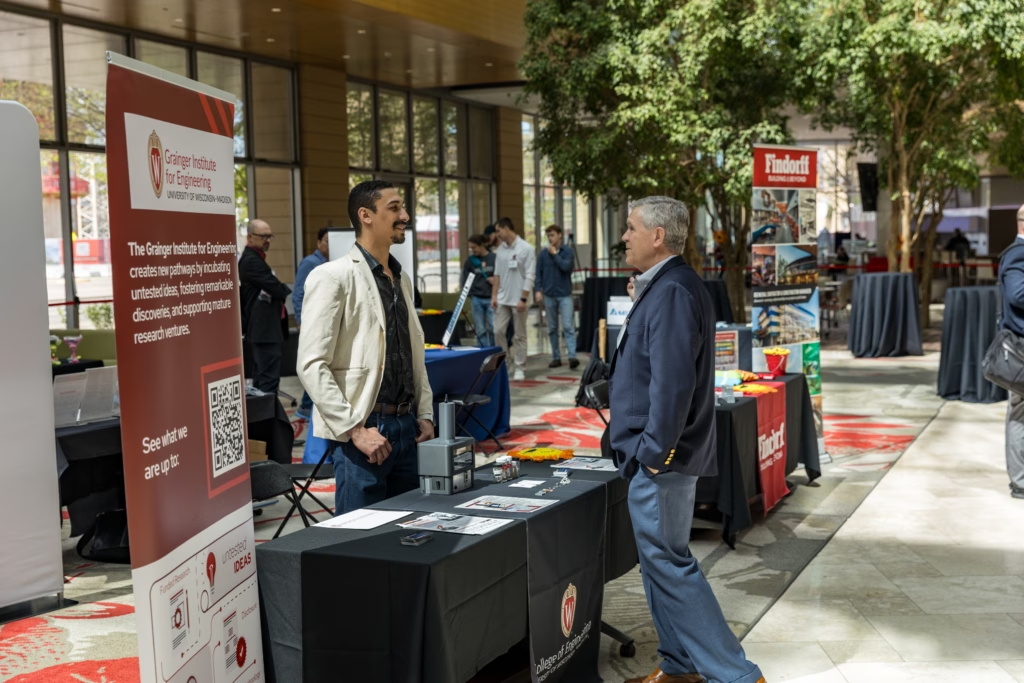
Public-private partnership is at the core of the Great Lakes Fusion Energy Alliance, which launched at the inaugural 2025 summit. Speakers pointed to the region’s historic strength in manufacturing as an advantage in building out a fusion supply chain. As Cary Forest, Prager Professor of Experimental Physics, put it: “The Midwest is full of people who know how to build things.”
“We’ve had great experiences working with local manufacturers,” said Ross Radel (BSNE ’03, MSNEEP ’04, PhDNEEP ’07), chief technology officer of SHINE Technologies, based in Janesville, Wisconsin, during one keynote panel session.
SHINE is one of four fusion companies to spin out of UW-Madison research labs, along with Realta Fusion, Type One Energy and Xantho Technologies. That’s no coincidence; fusion and plasma physics research at the university—spanning the College of Engineering and the Department of Physics in the College of Letters & Science—has put it at the forefront of the field, with an array of experiments on campus encompassing all the leading types of fusion reactors: donut-shaped tokomaks, coiled oval stellarators and tubular mirror devices.
“I think people don’t realize how much of the industry as a whole spun out of universities,” said Stephanie Diem, assistant professor of nuclear engineering and engineering physics and director of the Pegasus-III fusion experiment.
That includes workforce talent: More than 600 PhDs in fusion and plasma physics have graduated from UW-Madison over the years, while the number of first-year undergraduate students interested in studying nuclear engineering is growing.
“UW-Madison wants to help push fusion over the line,” said Eric Wilcots, dean of the College of Letters & Science who will take over as interim chancellor of the university on May 17, 2026. “Today is about building the ecosystem that fusion energy requires.”
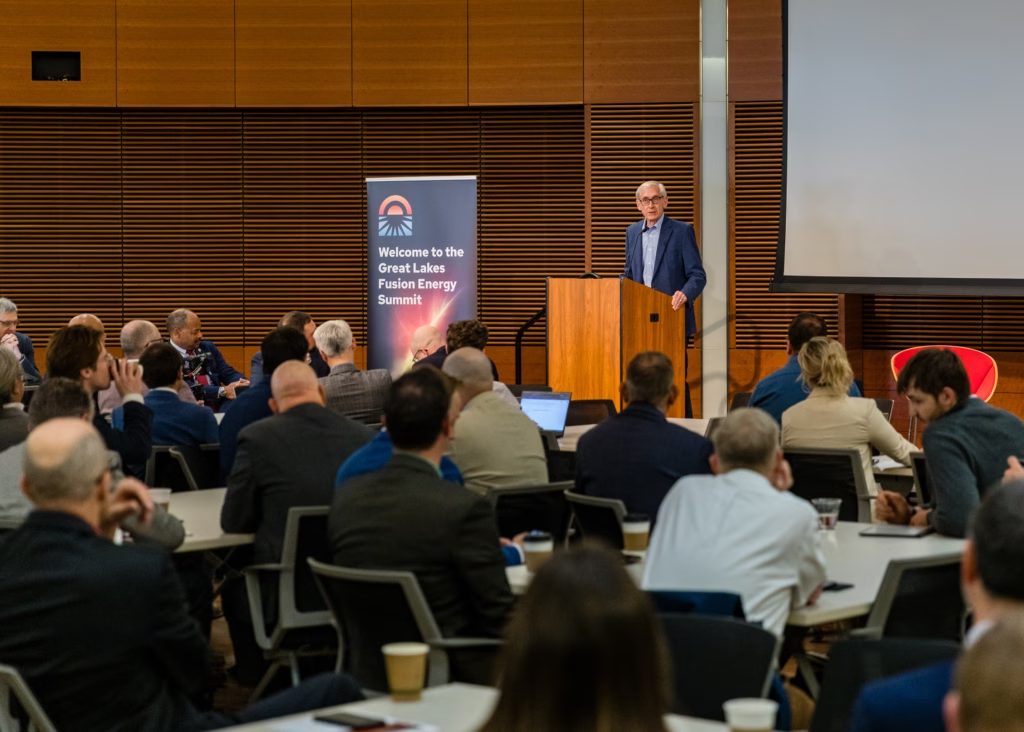 Wisconsin Gov. Tony Evers addresses attendees. Photos: Tom Ziemer.