
Highlights from 2023, a year of innovation and impact

For the UW-Madison College of Engineering, 2023 was a year full of extraordinary achievements and tremendous growth.

We advanced scientific knowledge on many fronts, improved the quality of people’s lives through our engineering expertise and leadership, and delivered meaningful hands-on educational experiences to prepare our students for success.

Here are some of our top stories from 2023.

Editors’ choice

Some of our most significant—and broadly appealing—research advances over the past year included:
Suyash Bhatt and Emily Masterson

Tiny antennas open door to injectable electronics for brain monitoring

By creating a miniscule device that translates brain activity into radiowaves, University of Wisconsin-Madison neuroengineers have taken a key step toward enabling injectable sensors for wireless, localized recording in the brain. The work, detailed in…
Professor George Huber and postdoctoral researcher Houqian Li working in lab

Revolutionary chemical recycling process adds big value to 'junk' plastic waste

Although many Americans dutifully deposit their plastic trash into the appropriate bins each week, much of that material, including flexible films, multilayer materials and a lot of colored plastics are not recyclable using conventional mechanical…
fertilizer production iStock image

New atomic-scale understanding of catalysis could unlock massive energy savings

Catalysts are materials that accelerate chemical reactions without undergoing changes themselves. They are critical for refining petroleum products and for manufacturing pharmaceuticals, plastics, food additives, fertilizers, green fuels, industrial chemicals and much more. Scientists and…
Marleen Ram places a drawing by Rembrandt under the watermark imaging system’s camera along with Rick Johnson and Rob Fucci

Cracking the Da Vinci chronology: How a camera and sophisticated computing can finally bring order to the works of a Renaissance genius

Leonardo Da Vinci may have been a genius, but he was also a hot mess. When he died in 1519, he left behind 7,000 pages of undated drawings, scientific observations…
Illustration of autonomous cars sensing

How a sensor based on the human eye could accelerate the reaction time of autonomous cars and drones

A new sensor inspired by the retina—the layer of cells in human and animal eyes that detects light and transmits signals to the brain—could improve the safety and performance of self-driving cars, robotics and high-speed…
Illustris Simulation

Through machine learning maps, cosmic history comes into focus

For millennia, humans have used optical telescopes, radio telescopes and space telescopes to get a better view of the heavens. Today, however, one of the most powerful tools for understanding the cosmos is the computer…
PhD student Weijun Shen works with a robotic arm

Work of art: PhD student brings origami to 3D printing

At home, Weijun Shen enjoys crafting origami cranes and frogs for his 4-year-old daughter. But the PhD student at the University of Wisconsin-Madison also brings his artistic curiosity into the research lab, in what might…
Stable Diffusion-generated image of researcher working with huge piles of data

ChatGPT makes materials research much more efficient

The artificial intelligence (AI) chatbot ChatGPT developed by OpenAI promises to reshape the way people work and learn. At the University of Wisconsin-Madison, in fact, the large language model is already aiding materials engineers, who…
Patrick Sullivan (left) and Xiu Liang Lyu working on designing and synthesizing new organic molecules.

For the sustainable grid of the future, the right battery chemistry matters

Renewable energy is ramping up quickly; in 2022, wind and solar power accounted for 12 percent of global energy output according to climate think tank Ember. But for these intermittent renewable energy sources to reach…
artificial retina istock image

Informed by mechanics and computation, flexible bioelectronics can better conform to a curvy body

Today, foldable phones are ubiquitous. Now, using models that predict how well a flexible electronic device will conform to spherical surfaces, University of Wisconsin–Madison and University of Texas at Austin engineers could usher in a…
Postdoctoral research associate Komal Chawla working in the lab

Discovery opens door to ultra-lightweight protective materials

In November 2022, University of Wisconsin-Madison engineers garnered widespread attention when they announced the creation of an ultra-shock-absorbing foam material that could dramatically improve helmets. The researchers’ material, an architected, vertically aligned carbon nanotube foam,…
Evan Willing and Tyler Dabney working in cold spray lab

"Wonder" material gulps down hydrogen, spits it out, and protects fusion reactor walls

University of Wisconsin-Madison engineers have used cold spray coating technology to produce a revolutionary workhorse material that can withstand the harsh conditions in a fusion reactor. The advance, detailed in a paper published Oct. 5,…

Outstanding faculty

Continuing its growth trajectory, the college welcomed 18 new faculty members in the 2023-24 academic year.
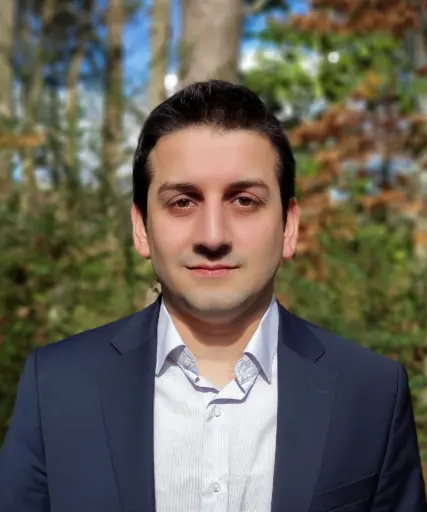
Mechanical Engineering Assistant Professor Yunus Alapan

Mechanical Engineering Assistant Professor Yunus Alapan

Biomedical Engineering Professor Randy Bartels

Biomedical Engineering Professor Randy Bartels

Biomedical Engineering Assistant Professor Joshua Brockman

Biomedical Engineering Assistant Professor Joshua Brockman

Electrical and Computer Engineering Assistant Professor Grigoris Chrysos

Electrical and Computer Engineering Assistant Professor Grigoris Chrysos

Chemical and Biological Engineering Assistant Professor Quentin Dudley

Chemical and Biological Engineering Assistant Professor Quentin Dudley

Electrical and Computer Engineering Assistant Professor Tsung-Wei Huang

Electrical and Computer Engineering Assistant Professor Tsung-Wei Huang

Electrical and Computer Engineering Assistant Professor Akhilesh Jaiswal

Electrical and Computer Engineering Assistant Professor Akhilesh Jaiswal

Materials and Science Engineering Assistant Professor Sebastian Kube

Materials and Science Engineering Assistant Professor Sebastian Kube

Industrial and Systems Engineering Professor Ranjana Mehta

Industrial and Systems Engineering Professor Ranjana Mehta

Mechanical Engineering Associate Professor James Pikul

Mechanical Engineering Associate Professor James Pikul

Materials and Science Engineering Associate Professor Yuan Ping

Materials and Science Engineering Associate Professor Yuan Ping

Electrical and Computer Engineering Assistant Professor Jinia Roy
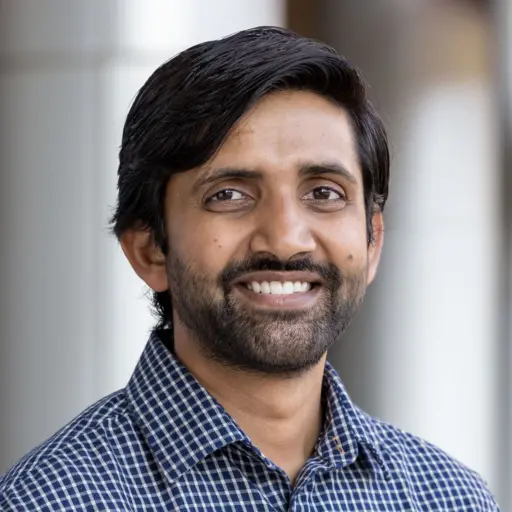
Electrical and Computer Engineering Assistant Professor Jinia Roy

Electrical and Computer Engineering Assistant Professor Manish Singh

Electrical and Computer Engineering Assistant Professor Manish Singh

Electrical and Computer Engineering Assistant Professor Haihan Sun

Electrical and Computer Engineering Assistant Professor Haihan Sun

Mechanical Engineering Assistant Professor Wei Wang

Mechanical Engineering Assistant Professor Wei Wang

Nuclear Engineering and Engineering Physics Assistant Professor Adelle Wright

Nuclear Engineering and Engineering Physics Assistant Professor Adelle Wright

Electrical and Computer Engineering Assistant Professor Feng Ye

Electrical and Computer Engineering Assistant Professor Feng Ye

Mechanical Engineering, Electrical and Computer Engineering Assistant Professor Lei Zhou

Mechanical Engineering, Electrical and Computer Engineering Assistant Professor Lei Zhou

Additionally, our young faculty members continue to earn some of the nation’s top honors for early-career researchers. Here are a few of those awards.

Ying Wang

Wang will use DOE career award to develop quantum materials to harvest WiFi energy

Ying Wang, an assistant professor in electrical and computer engineering at the University of Wisconsin-Madison, was selected by the U.S. Department of Energy for a prestigious Early Career Research Program award. Her proposal “Exploring Nonlinear…
Members of ARC Lab test drone

With NSF CAREER Award, Xiangru Xu aims to improve safety of autonomous systems

Despite years of development, truly autonomous technologies such as self-driving vehicles and delivery drones continue to remain elusive, largely due to safety and reliability concerns. Meanwhile, thanks to advances in artificial intelligence, neural networks—a type…

Vinayak will use CAREER Award to make machine learning models learn from diverse data

Even though you may not entirely realize it, artificial intelligence has a huge influence on our lives. The AI subfield of machine learning, in which computers learn from data, underlies social media algorithms and the…
Matt Gebbie and Ryan Cashen in the lab

Applying just the right chemistry to power new rechargeable batteries

Over the last 30 years, rechargeable lithium-ion batteries have gotten smaller and more powerful, making them key components in smartphones, laptops, earbuds, electric cars and just about every portable electronic device. The next generation of…

College of Engineering in the news

Our faculty members routinely share their expertise with journalists and the public. Among the hundreds of news outlets that featured us in 2023 were the following: